 Syllabus - Spring 2024
 January 16th - March 5th
Department of Geography, Planning and Recreation
PRM 447 Research & Evaluation in PRM
Term/Year: Fall & Spring
Credit: 3
Course Prerequisites: STA 270
Applied Statistics
Mode of Instruction: Online & Blended
Instructor: Charles Hammersley, Ph.D.
Office: SBS West, Building 70, Room 250
Instructor's Contact Information: Parks and Recreation Management Program, PO Box 15016, Flagstaff, AZ 86011-5018
E-mail: charles.hammersley@nau.edu
Phone: (928) 523-6655
Instructor's Availability: Usually, 9:00 am to 1:00 pm (other hours available by appointment). I try to reply to all emails within 24 hours.
Course Purpose: The PRM 447 Research & Evaluation in PRM course is a required course in the Parks & Recreation Management Program. The course will present a variety of learning opportunities directly related to identifying and defining basic "research and evaluation" concepts and applied research and evaluation assignments meant to deepen a student's ability to read, evaluate and apply basic research concepts to the parks and recreation management profession.

Course Student Learning Outcomes
 |
Ability to analyze programs, services, and resources in relationship to participation requirements. |
|
Describe the procedures and techniques for assessment of leisure needs. |
|
Discuss the purpose, basic procedures and interpretation, and application of research and evaluation methodology related to leisure services. |
|
Ability to apply computer and statistical techniques to assessment, planning and evaluation processes. |
|
Develop principals and procedures for evaluation of leisure programs and services. |
|
Ability to
formulate, plan for implementation, and evaluate to which goals and
objectives for the leisure services and for groups and individuals within
the service have been met.
|
Assignments/Assessments of Course Student Learning Outcomes
The following assessment methods will be used to evaluate a students comprehension of the course learning outcomes.
GradingBasis
| Research Proposal | 45% |
| Assignments (5@ 5 points each) | 25% |
| Tests (3 @ 10% each) | 30% |
| Total points | 100% |
Extra Credit: Completing the Extra Credit option is worth 5 points added to your final grade.
Grading Policies:
 To Calculate your Grade:
1) Add the three test grades; then divide that number by 3; then multiply that
number by .3;
2) Add the five assignment grades; then divide that number by 5; then
multiply that number by .25;
3) Multiply the Research Project grade by .45;
4) Add the numbers from step 1, step 2 and step 3 to get your numerical grade.
5) See the information below (Grading Basis) for converting your numerical grade
to a letter grade.
Grading Basis: Grades will be assigned as:
90 – 100 = A; 80 – 89 = B; 70 – 79 = C; 60 – 69 = D; less than 59 = F
Important Note: Any breech of the NAU Academic Dishonesty Policy (See Student handbook) will result in the offending student receiving an "F" in the course.
Important Note: No assignments or tests will be accepted after their due dates. All assignments and tests must be submitted by 11:59 pm on their due date.
Reading Materials
Required Text:
|
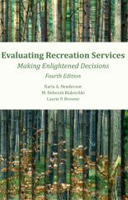
Henderson, K. A., Bialeschki, M. D., & Browne, L. P. (2017). Evaluating Recreation Services: Making Enlightened Decisions (4th Ed). State College, PA; Venture Publishing ISBN: 978-1-57167-847-8 |
Suggested Reference Text:
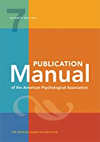 |
Publication Manual of the American Psychological Association (7th ed.). (2020). American Psychological Association. https://doi.org/10.1037/0000165-000 ISBN: 978-1-4338-3216-1 (pbk) |
Syllabus Policy Statements
NAU expects every student to firmly adhere to a strong ethical code of academic integrity in all their scholarly pursuits. The primary attributes of academic integrity are honesty, trustworthiness, fairness, and responsibility. As a student, you are expected to submit original work while giving proper credit to other people’s ideas or contributions. Acting with academic integrity means completing your assignments independently while truthfully acknowledging all sources of information, or collaboration with others when appropriate. When you submit your work, you are implicitly declaring that the work is your own. Academic integrity is expected not only during formal coursework, but in all your relationships or interactions that are connected to the educational enterprise. All forms of academic deceit such as plagiarism, cheating, collusion, falsification or fabrication of results or records, permitting your work to be submitted by another, or inappropriately recycling your own work from one class to another, constitute academic misconduct that may result in serious disciplinary consequences. All students and faculty members are responsible for reporting suspected instances of academic misconduct. All students are encouraged to complete NAU’s online academic integrity workshop available in the E-Learning Center and should review the full Academic Integrity policy available at https://policy.nau.edu/policy/policy.aspx?num=100601.
ARTIFICIAL INTELLIGENCE
Artificial intelligence (AI) technologies bring both opportunities and challenges. Ensuring honesty in academic work creates a culture of integrity and expectations of ethical behavior. Its use can depend on the instructional setting, varying by faculty member, program, course, and assignment. Please refer to the course policies, any additional course-specific guidelines in this syllabus, or communicate with the instructor to understand expectations. NAU recognizes the role that these technologies will play in the current and future careers of our graduates. NAU expects students to practice responsible and ethical use of AI technologies to assist with learning within the confines of course policies.
All lectures and course materials, including but not limited to exams, quizzes, study outlines, and similar materials are protected by copyright. These materials may not be shared, uploaded, distributed, reproduced, or publicly displayed without the express written permission of NAU. Sharing materials on websites such as Course Hero, Chegg, or related websites is considered copyright infringement subject to United States Copyright Law and a violation of NAU Student Code of Conduct. For additional information on ABOR policies relating to course materials, please refer to ABOR Policy 6-908 A(2)(5).
Pursuant to Arizona Board of Regents guidance (ABOR Policy 2-224, Academic Credit), each unit of credit requires a minimum of 45 hours of work by students, including but not limited to, class time, preparation, homework, and studying. For example, for a 3-credit course a student should expect to work at least 8.5 hours each week in a 16-week session and a minimum of 33 hours per week for a 3-credit course in a 4-week session.
Membership in NAU’s academic community entails a special obligation to maintain class environments that are conductive to learning, whether instruction is taking place in the classroom, a laboratory or clinical setting, during course-related fieldwork, or online. Students have the obligation to engage in the educational process in a manner that does not interfere with normal class activities or violate the rights of others. Instructors have the authority and responsibility to address disruptive behavior that interferes with student learning, which can include the involuntary withdrawal of a student from a course with a grade of “W”. For additional information, see NAU’s Disruptive Behavior in an Instructional Setting policy at https://nau.edu/university-policy-library/disruptive-behavior.
NAU prohibits discrimination and harassment based on sex, gender, gender identity, race, color, age, national origin, religion, sexual orientation, disability, veteran status and genetic information. Certain consensual amorous or sexual relationships between faculty and students are also prohibited as set forth in the Consensual Romantic and Sexual Relationships policy. The Equity and Access Office (EAO) responds to complaints regarding discrimination and harassment that fall under NAU’s Nondiscrimination and Anti- Harassment policy. EAO also assists with religious accommodations. For additional information about nondiscrimination or anti-harassment or to file a complaint, contact EAO located in Old Main (building 10), Room 113, PO Box 4083, Flagstaff, AZ 86011, or by phone at 928-523-3312 (TTY: 928-523-1006), fax at 928-523-9977,
email at equityandaccess@nau.edu, or visit the EAO website at https://nau.edu/equity-and-access.
TITLE IX
Title IX of the Education Amendments of 1972, as amended, protects individuals from discrimination based on sex in any educational program or activity operated by recipients of federal financial assistance. In accordance with Title IX, Northern Arizona University prohibits discrimination based on sex or gender in all its programs or activities. Sex discrimination includes sexual harassment, sexual assault, relationship violence, and stalking. NAU does not discriminate on the basis of sex in the education programs or activities that it operates, including in admission and employment. NAU is committed to providing an environment free from discrimination based on sex or gender and provides a number of supportive measures that assist students, faculty, and staff.
One may direct inquiries concerning the application of Title IX to either or both the Title IX Coordinator or the U.S. Department of Education, Assistant Secretary, Office of Civil Rights. You may contact the Title IX Coordinator in the Office for the Resolution of Sexual Misconduct by phone at 928-523-5434, by fax at 928-523-0640, or by email at titleix@nau.edu. In furtherance of its Title IX obligations, NAU promptly will investigate or equitably resolve all reports of sex or gender-based discrimination, harassment, or sexual misconduct and will eliminate any hostile environment as defined by law. The Office for the Resolution of Sexual Misconduct (ORSM): Title IX Institutional Compliance, Prevention & Response addresses matters that fall under the university's Sexual Misconduct policy. Additional important information and related resources, including how to request immediate help or confidential support following an act of sexual violence, is available at https://in.nau.edu/title-ix.
ACCESSIBILITY
Professional disability specialists are available at Disability Resources to facilitate a range of academic support services and accommodations for students with disabilities. If you have a documented disability, you can request assistance by contacting Disability Resources at 928-523-8773 (voice), ,928-523-8747 (fax), or dr@nau.edu (e-mail). Once eligibility has been determined, students register with Disability Resources every semester to activate their approved accommodations. Although a student may request an accommodation at any time, it is best to initiate the application process at least four weeks before a student wishes to receive an accommodation. Students may begin the accommodation process by submitting a self-identification form online at https://nau.edu/disability-resources/student-eligibility-process or by contacting Disability Resources. The Director of Disability Resources, Jamie Axelrod, serves as NAU’s Americans with Disabilities Act Coordinator and Section 504 Compliance Officer. He can be reached at jamie.axelrod@nau.edu.
RESPONSIBLE CONDUCT OF RESEARCH
Students who engage in research at NAU must receive appropriate Responsible Conduct of Research (RCR) training. This instruction is designed to help ensure proper awareness and application of well-established professional norms and ethical principles related to the performance of all scientific research activities. More information regarding RCR training is available at https://nau.edu/research/compliance/research-integrity.
MISCONDUCT IN RESEARCH
As noted, NAU expects every student to firmly adhere to a strong code of academic integrity in all their scholarly pursuits. This includes avoiding fabrication, falsification, or plagiarism when conducting research or reporting research results. Engaging in research misconduct may result in serious disciplinary consequences. Students must also report any suspected or actual instances of research misconduct of which they become aware. Allegations of research misconduct should be reported to your instructor or the University’s Research Integrity Officer, Dr. David Faguy, who can be reached at david.faguy@nau.edu or 928-523-6117. More information about misconduct in research is available at https://nau.edu/university-policy-library/misconduct-in-research.
SENSITIVE COURSE MATERIALS
University education aims to expand student understanding and awareness. Thus, it necessarily involves engagement with a wide range of information, ideas, and creative representations. In their college studies, students can expect to encounter and to critically appraise materials that may differ from and perhaps challenge familiar understandings, ideas, and beliefs. Students are encouraged to discuss these matters with faculty.
Last revised August 4, 20224
Class Policies:
Retests/makeup tests – Make-up tests will be not be allowed unless evidence of a significant personal or medical issue is provided to the course Instructor.
 Copyright
2001. Northern Arizona University, ALL RIGHTS RESERVED
Copyright
2001. Northern Arizona University, ALL RIGHTS RESERVED